As modern engineering systems become increasingly complex, traditional document-based design methods are no longer sufficient to manage system requirements, architecture, and behavior. This is where SysML plays a crucial role. SysML enables engineers to visually model complex systems and improve collaboration across multidisciplinary teams.
From aerospace systems and automotive platforms to embedded electronics and robotics, SysML has become an essential part of Model-Based Systems Engineering (MBSE). In this blog, we will explore what SysML is, why it is important, how it works, and where it is used in real-world engineering projects.
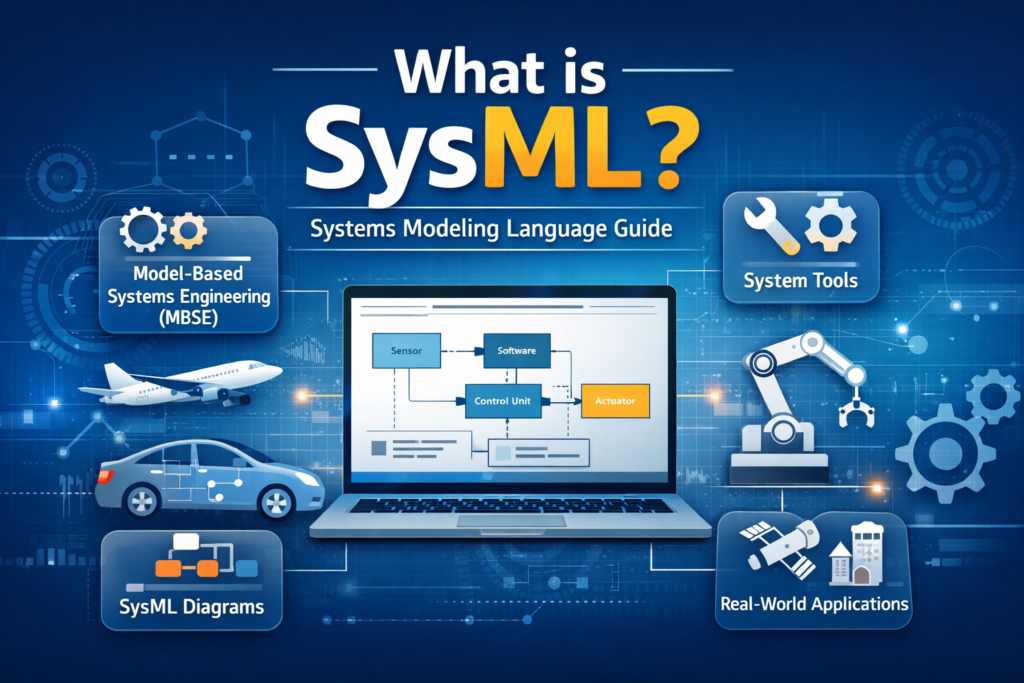
What is systems modeling language?
SysML stands for The systems modeling language (SysML) is a general-purpose modeling language for systems engineering applications a standardized modeling language used to specify, design, analyze, and verify complex systems. It provides a graphical approach for representing system architecture, behavior, requirements, and relationships between system components.
SysML is derived from UML, but it is specifically designed for systems engineering rather than only software engineering. While UML focuses on software structures and processes, SysML supports the modeling of complete systems that include hardware, software, data, personnel, and operational procedures.
Engineers use SysML diagrams to represent system components and interactions visually. This approach helps teams understand complex systems more clearly compared to long textual documentation.
Why is Important in Systems Engineering?
Engineering systems today often consist of thousands of interconnected components. Managing such complexity requires a structured modeling approach.
SysML plays a vital role in enabling Model-Based Systems Engineering (MBSE) by replacing traditional document-heavy processes with digital models. Instead of managing hundreds of requirement documents, engineers can work with a single integrated system model.
Some key benefits of SysML include:
- Improved communication between engineering teams
- Better visualization of system architecture
- Early detection of design issues
- Clear traceability between requirements and system design
- Reduced development risks and costs
Organizations across industries rely on SysML to improve collaboration between mechanical, electrical, and software engineering teams.
Who Uses Systems modeling language?
SysML is widely used by professionals involved in designing and managing complex systems. The language is commonly used by:
- Systems engineers
- Software architects
- Hardware engineers
- Automotive engineers
- Aerospace engineers
- Defense system developers
Large engineering organizations often adopt SysML as part of their MBSE strategy to streamline product development and ensure consistency across engineering disciplines.
Industries that heavily rely on SysML include aerospace, automotive, electronics, telecommunications, and industrial automation.
Where it is Used?
SysML is applied in many real-world engineering projects that involve complex systems and interconnected components.
For example, in the aerospace industry, SysML is used to model aircraft systems such as flight control systems, avionics, and communication systems. In the automotive sector, engineers use SysML to design advanced driver-assistance systems (ADAS), electric vehicle architectures, and autonomous driving platforms.
Similarly, robotics and industrial automation systems also benefit from SysML models that represent control systems, sensors, and data flows.
Engineering platforms from companies like Dassault Systèmes provide advanced modeling environments that support SysML and MBSE workflows.
How Does Systems modeling language Work?
SysML works by representing system components and their relationships using different types of diagrams. These diagrams help engineers describe system structure, behavior, and requirements in a clear and organized way.
Some of the most important SysML diagrams include:
Requirement Diagrams
These diagrams capture system requirements and show how they relate to different components of the system.
Block Definition Diagrams (BDD)
BDDs represent the structure of a system and define its main components.
Internal Block Diagrams (IBD)
IBDs show how components within a system interact with each other through interfaces and connections.
Activity Diagrams
These diagrams illustrate workflows and system processes.
Sequence Diagrams
Sequence diagrams describe how different system components interact over time.
State Machine Diagrams
These diagrams represent different states of a system and how it transitions between those states.
By combining these diagrams, engineers can build a comprehensive digital model of a system and analyze its behavior before physical development begins.
Tools That Support SysML Modeling
Several software tools support SysML modeling and MBSE practices. These tools allow engineers to create, manage, and analyze system models throughout the product lifecycle.
Popular SysML tools include:
- Cameo Systems Modeler
- MagicDraw
- CATIA Magic
These tools provide advanced capabilities such as requirement traceability, model simulation, system architecture analysis, and integration with other engineering tools.
Such platforms help engineering teams maintain consistency across system design, testing, and validation processes.
The Future of it
As systems become increasingly complex, the adoption of SysML and MBSE continues to grow. One of the most significant developments in this area is SysML v2.
SysML v2 aims to improve the precision, usability, and interoperability of system models. It introduces improved semantics, better automation capabilities, and stronger integration with modern digital engineering environments.
Future engineering platforms will increasingly integrate SysML with technologies such as digital twins, artificial intelligence, and cloud-based collaboration tools. This evolution will enable organizations to build smarter and more connected systems.
Conclusion
SysML has become an essential tool for modern systems engineering. By providing a standardized modeling language, it allows engineers to design, analyze, and manage complex systems more effectively.
From aerospace and automotive systems to robotics and industrial automation, SysML helps organizations visualize system architecture, manage requirements, and reduce development risks. As engineering practices continue to evolve toward model-based approaches, SysML will play a critical role in shaping the future of system design and innovation.
Organizations adopting MBSE and SysML are better equipped to handle the growing complexity of modern engineering systems while delivering reliable and high-quality products.